I have many discussions with my dad. He’s one of the wisest and coolest people I know. On one of these discussions, we spoke about the “Japa plan.” He had asked me what my latest plans were to leave the country. This was after my elder sister had already relocated.
“So when are you travelling out of Nigeria?”
I told him I wasn’t interested in the Japa plan. I didn’t see a long-term goal for myself there, and even worse, I didn’t see one for my children.
I’m not out of touch with reality. I know the Nigerian passport isn’t great and all the stigma that comes with it. But more than that, I know the stigma that comes with being a Black person, regardless of where you are or what you’ve achieved in the world. Your Black skin is an identity card that tells people you are from Africa.
My belief is that the Black person will always be subject to racism and ridicule as long as Africa doesn’t count in the global economy.
As a Nigerian born in Lagos but with Delta heritage, I grew up culture-blind. I didn’t really see or understand tribe or religion. Race, however, was very apparent. I had a half-caste neighbour growing up, as well as a few white schoolmates, and there was a difference in how they were perceived and treated.
It was only a few years later that the reality of being “Urhobo” hit me. What did it mean to be from this tribe? I couldn’t speak the language. I wasn’t born in the town. I didn’t have anyone who could tell me the details of my history or what it meant for me.
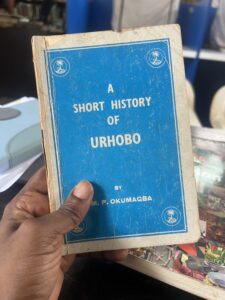
Neither did my dad. He grew up in the northern part of Nigeria and spent very little time in our hometown, Warri. So I understand tribal disconnection in a weird way. I admire my tribe, but from afar. I’m from it, but not really a part of it.
It’s home that doesn’t look or feel familiar.
I imagine this is a gap that has expanded for many Black people all over the world. It’s justifiable for the people who were shipped away to look for ways to fill this void, to stay in the countries that stole them away and seek some form of reparations.
But what about the current generation?
The children born in the UK, Canada, the US and beyond. Where would they call home?
Yes, they are citizens. But their Black skin will speak for them before their passports do. What does our Black skin say?
I imagine all children are perceptive because they are so inquisitive at that age. But remembering my own observations about the world, now that I have seen so much more of it, makes me marvel at the depth of a child’s wonder. I have a deeper respect for children the older I grow because of this.
Everything I do somehow now revolves around making the world a better place for children to experience life in its purest form.
So what are we building for the next generation of African children? What are we leaving the next generation about home?
So I told my dad I was going to stay in Nigeria, and broadly Africa, and keep building from here and for here. That the next generation needs something to hold on to, they need something to come back to if given the option. They deserve to understand where they are from and what it means to exist as global citizens.
That we are on a different trajectory from the rest of the world, but we’re not lost, inferior, or behind. We’re simply different, and we need to celebrate that difference and build things from that original core.
Funny story: my dad said that he wishes he could go back to 1984 and play back exactly what he said when he was asked a similar question about travelling abroad. He said the exact same things before he had children, almost without skipping a beat.
I responded, “I’m your son at the end of the day.”
We both had a hearty laugh.
But then I asked him, knowing what you know now, what decision would you have made? He said he would have travelled. He said, “I knew the country had a possibility to go bad, but I would never have believed that things would get this terrible in Nigeria.”
He added, “The same dining halls and hostels I used in Ahmadu Bello University in the 80s are the same facilities students are using today, with little or no upgrades.”
His conclusion was that if he had to do it again, he would relocate out of Nigeria.
I see the wisdom in his decision-making. His art would probably have made more waves. My siblings and I would have had an easier start to life. My reality would be very different.
But I get coconut head.
I told him I’d remain steadfast in my goal to stay here. Not because I assume things would get better, but because I would be dogged about adding my quota to building out of the mess we’re in, with hopes that it sparks the next flame to keep the tables turning.
So it’s finally here…one of the projects that carries this fire forward. It has been a crazy journey to finally get it up, but it’s up and running.
It represents a flame from my dad that I inherited, and I’m carrying it on, redefining, refining and refurbishing it.
It’s the House of Paul Ejukorlem.
The HOPE project seeks to build around things we inherit. In my case, it’s directly owning the art passed on from my dad. There are different layers to this project that will unfold over time, but we’re going to start by celebrating the art of the man who started it all, with his belief in the country and his investment in his craft: My dad, Paul Ejukorlem.
We’re selling his art pieces, attending exhibitions and making him available for commissions. His works can be viewed and ordered here: https://houseofpaulejukorlem.com.
This is not the beginning of the story, but I’m happy to have you join in at this point in time.
Cheers to hope for the next generation.